
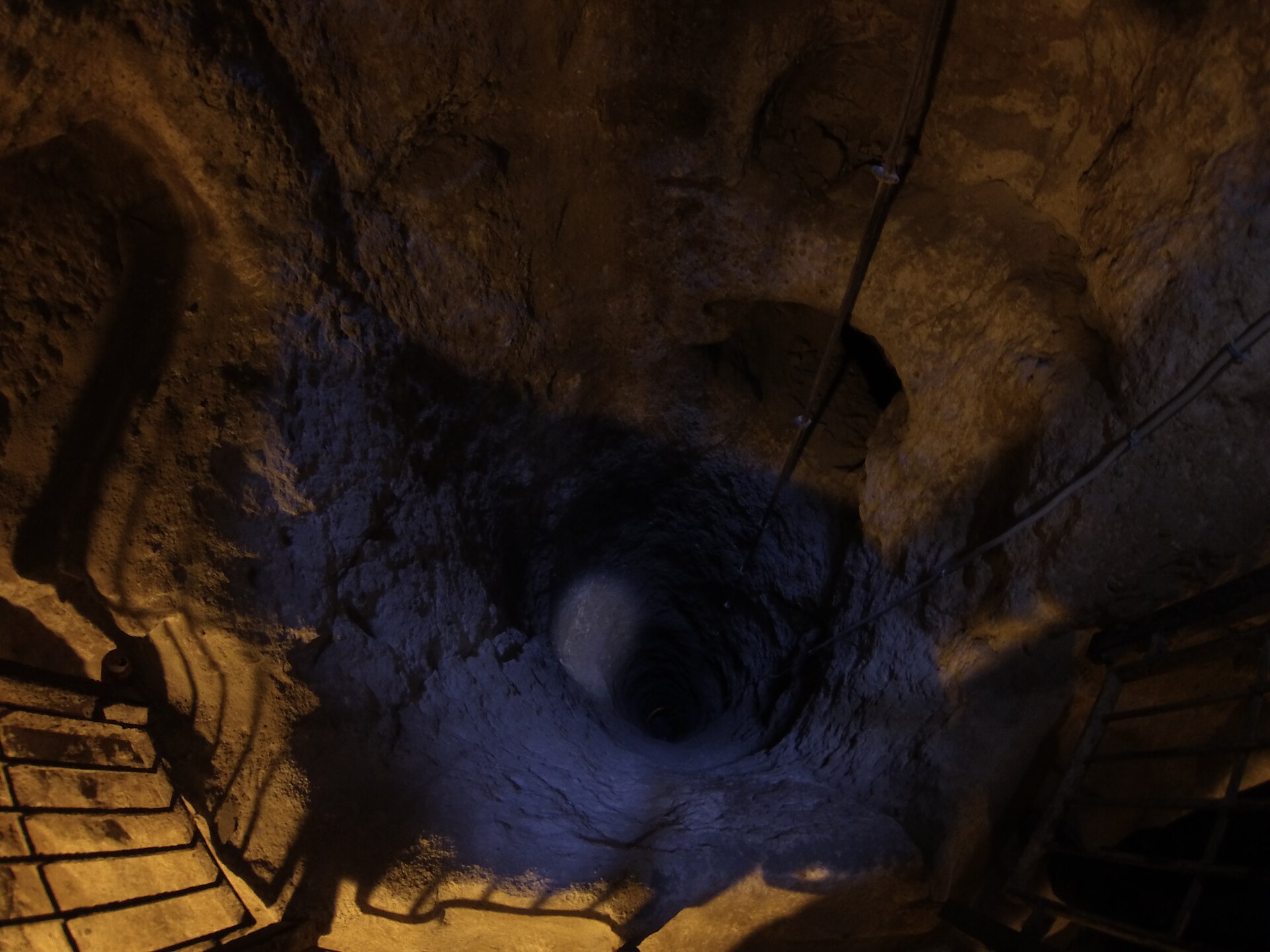

4. The openings between levels matter too
The shaft in the second photograph draws your attention vertically. The ministry lists ventilation stacks and a well among Derinkuyu’s essential features. Looking into that opening is a reminder that a network of rooms also needs connections with the surface.
It is tempting to look only at doors and tunnels. Air and water make the larger underground arrangement easier to understand.
5. Derinkuyu belongs to a much larger rock landscape
UNESCO includes Derinkuyu and Kaymaklı in the World Heritage property covering Göreme National Park and the Rock Sites of Cappadocia. Across this region, rock-hewn churches, dwellings, villages and underground towns reveal a long relationship between people and the landscape.
UNESCO describes architecture made by removing material from natural rock. That is a useful way to look at the photographs: each room represents space carved away. UNESCO’s account of Cappadocia places the site in its wider setting.
6. The real details are compelling enough
A staircase, a door, a shaft: each is a small part of an unusually large response to the need for shelter. Derinkuyu becomes more interesting when you follow those practical clues through its rooms.