
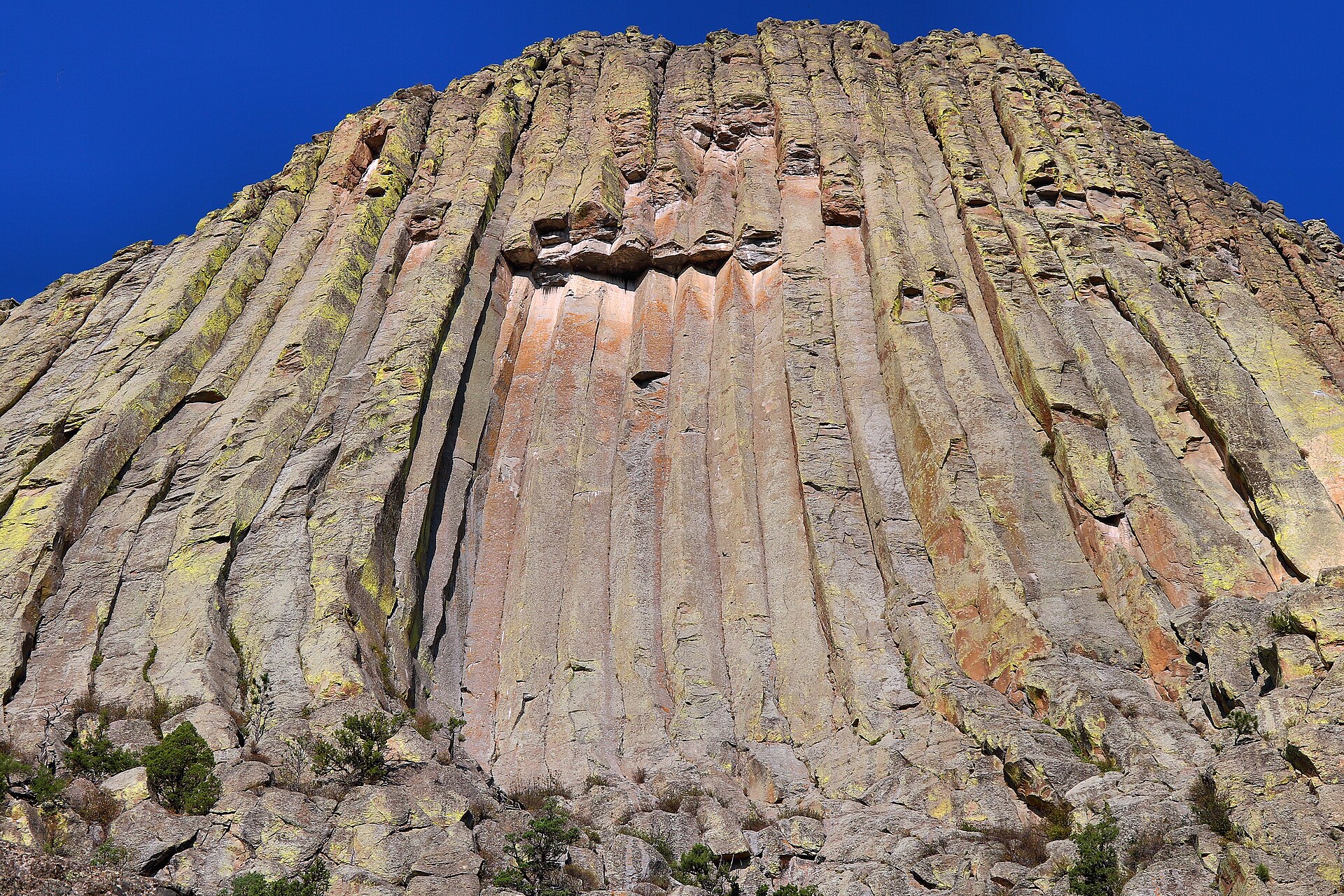

From below, the long lines in Devils Tower look almost architectural. Tall pillars press together, broken by deep cracks and irregular ledges. The close-up photograph makes it easy to imagine someone assembling the rock in sections.
The columns formed naturally as molten rock cooled. The landscape around them then changed dramatically, revealing the tower that stands above northeastern Wyoming today.
1. Cooling rock can pull itself apart
The National Park Service explains that molten rock contracts as it cools and solidifies. Stress develops, and cracks divide the rock into columns. Geologists call the pattern columnar jointing.
The straight lines are the visible result of that process. At Devils Tower, the rock is phonolite porphyry, an uncommon type of igneous rock. The park’s formation guide explains the cooling and cracking.
2. There is still a question about the larger formation
Knowing how columns form does not settle every detail of the tower’s history. The park describes several explanations for the original body of molten rock and its relationship to the surrounding landscape.
Erosion is central to these explanations: surrounding material was removed, exposing the harder rock. The same process also removed evidence geologists would like to examine. The visible columns tell a clear story about cooling, while parts of the larger history remain debated.
3. The pillars do not all behave like straight fence posts
The park’s Geodiversity Atlas describes columns that are nearly vertical higher up but flare outward near the base. Some become almost horizontal on the southwest side. Several columns can merge into larger, less distinct shapes below.
That variation rewards a closer look. Follow one line downward in a photograph and the pattern becomes less uniform than it first appeared. The geological atlas documents these changes.