
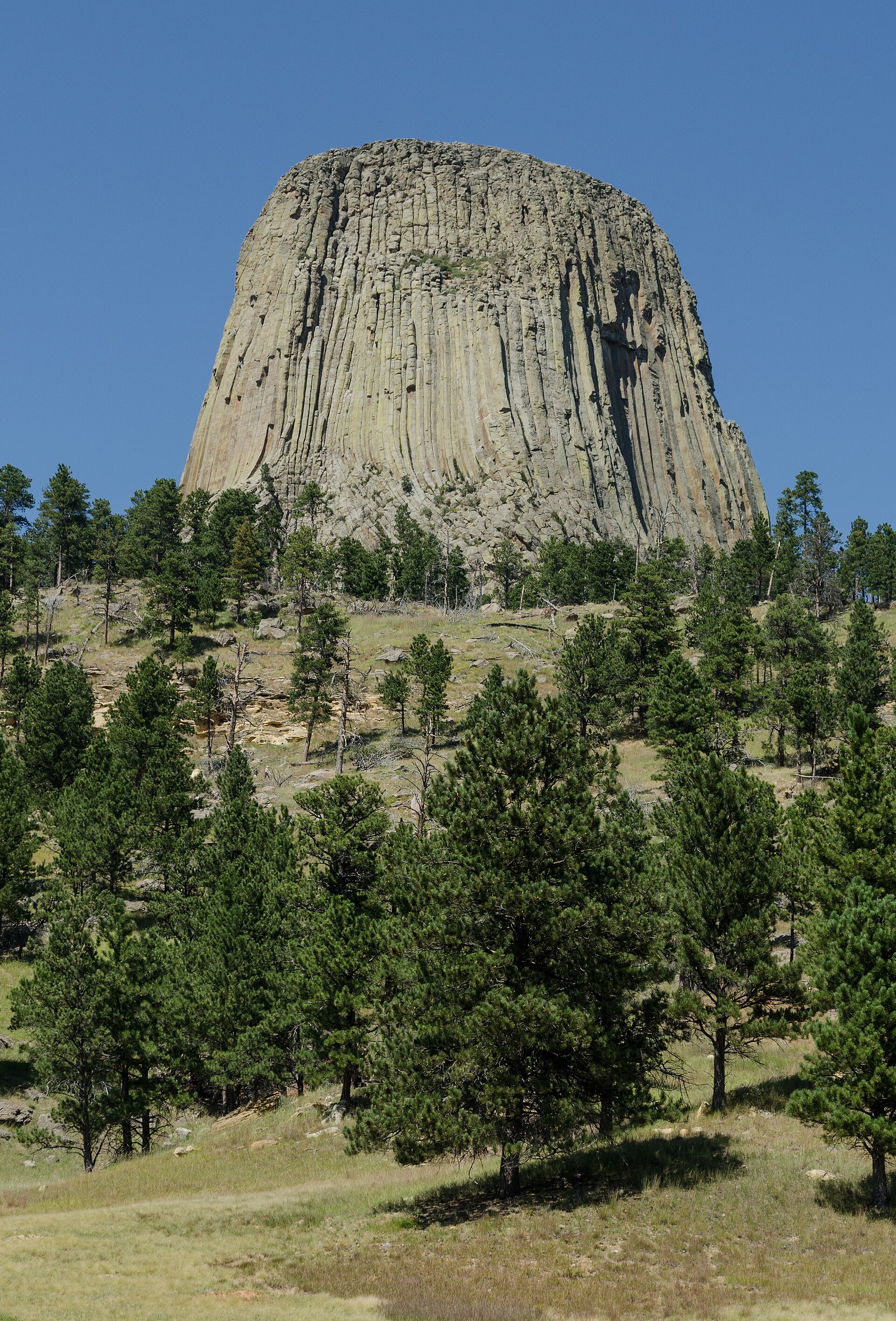

4. The boulders below are part of the story
The fallen rock around the base records weathering and erosion. The park explains that water can enter cracks, freeze and expand, helping force rock apart. Roots can also widen cracks; gravity moves loosened pieces downward.
The close-up view shows a patterned face, while the wider view reveals trees and rock debris below it. Both belong to a landscape that continues to change. The park’s geology page explains these processes.
5. Bear Lodge has meanings beyond its geology
The National Park Service describes the tower as sacred to many Native American tribes, including the Arapaho, Cheyenne, Crow, Kiowa, Lakota and Shoshone. Different communities preserve their own names and oral histories connected with it.
Bear Lodge is among the names associated with the formation. Learning those connections adds something a description of cooling rock cannot provide: an understanding of the place’s continuing human significance. Read about Bear Lodge and its names.
6. Look again at the lines
The repeated shapes make the tower memorable. Once you know about contraction, cracking and erosion, those lines become clues to a long physical history. The photographs show a striking pattern, and the sources help explain why it exists.