
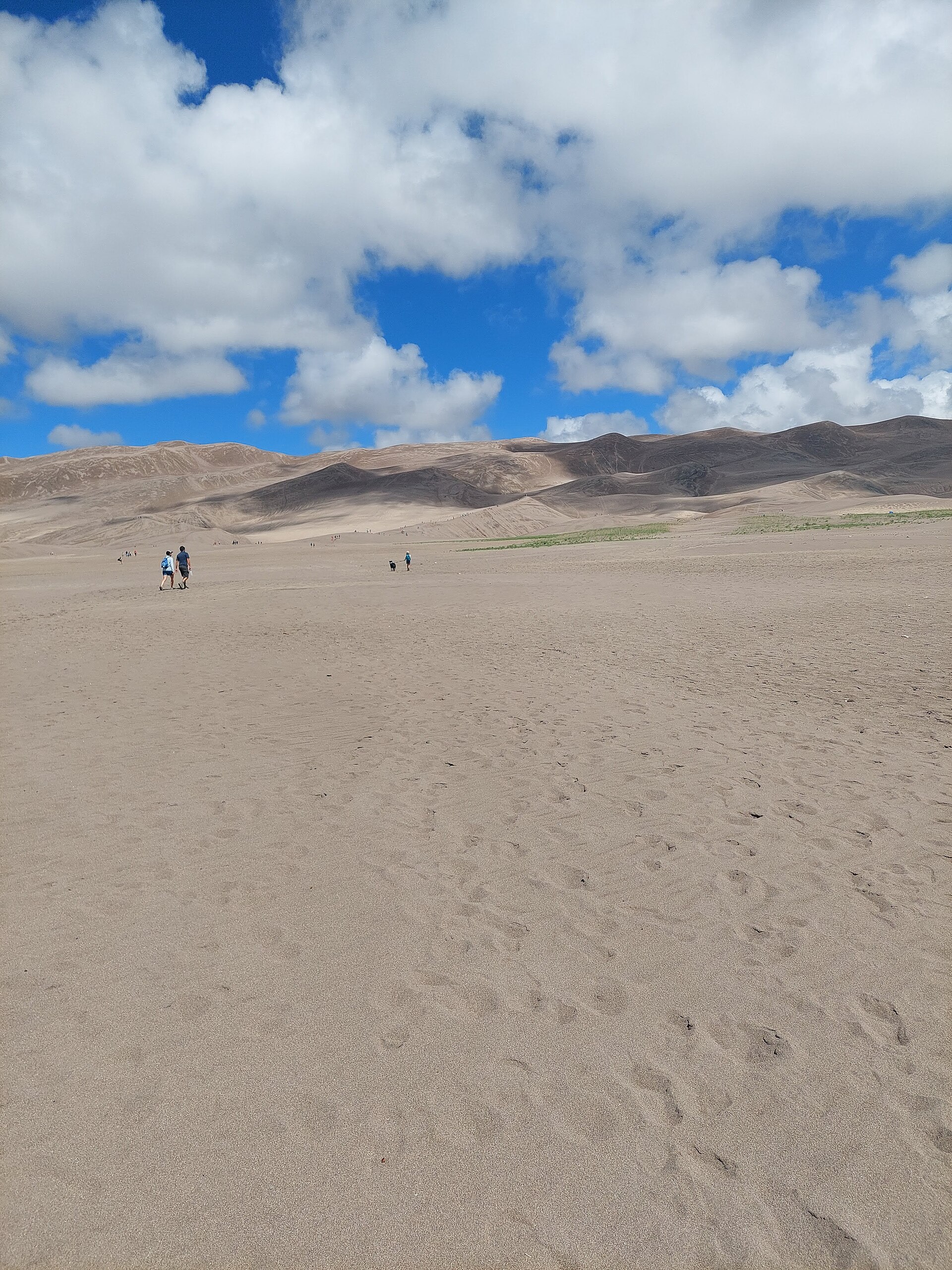

4. The shape of a dune comes from moving grains
The US Geological Survey explains that wind deposits sand into mounds. As a slope grows steeper, its edge can collapse under its own weight. Repeated movement shapes the dune.
At Great Sand Dunes, winds from different directions help produce more complicated forms. A dune is an accumulation whose surface is continually being rearranged. The USGS geology guide explains the different shapes.
5. The larger landscape helps keep the sand here
The park describes opposing winds, a supply of sand from the valley and streams that recycle sand around the dune field. Individual ridges can move even when the overall dune field looks similar over much longer periods.
The wider photograph helps show the scale. People become small markers against slopes that are part of a much larger system of wind, water and sand.
6. Listen, then look again
The recording changes how a dune photograph feels. You can see the slope and the grains being disturbed; the sound adds another way to understand the landscape. Singing sand is a reminder that some natural places are worth exploring with more than your eyes.